
Standard Washington homeowners policies (HO-3) typically cover water damage that is sudden and accidental—such as a burst supply pipe, ruptured water heater, or split washing-machine hose—while excluding gradual leaks, neglected maintenance, and exterior groundwater or floodwater unless you carry separate flood insurance or a Water Backup endorsement.
After the initial shock of a flooded room wears off, the next question every Burien homeowner asks is straightforward: "Will my insurance pay for this?" Navigating a water damage claim in King County can feel opaque because two leaks that look identical on the floor can receive opposite coverage decisions depending on how the water entered the house and how clearly the loss is documented. This guide breaks down how Washington homeowners policies categorize water damage, which endorsements matter most in Burien's rainy climate, and the exact documentation adjusters expect to see.
Sudden & Accidental vs. Gradual Damage: The Core Policy Distinction
Most residential policies in Washington hinge on two words: sudden and accidental. If a copper supply line inside a wall in Gregory Heights freezes and splits overnight, or a ten-year-old hot water tank ruptures without warning, the resulting water extraction, drywall removal, and structural drying are generally covered perils (subject to your deductible). Note, however, that insurance usually covers the resulting water damage to floors, walls, and cabinets—not the plumber's invoice to replace the failed pipe or appliance itself.
By contrast, if a slow drip under a bathroom vanity rots out the subfloor over six months, or failing caulk around a shower pan gradually saturates framing, insurers typically classify the damage as long-term seepage or deferred maintenance and deny the claim. That distinction is why immediate documentation and rapid burst pipe water damage cleanup matter so much: waiting days to address a sudden leak can cause secondary swelling and mold that adjusters may question.
Common Burien Water Scenarios & Typical Coverage Rules
Every policy has unique exclusions, so always read your declarations page and endorsements. The table below outlines how standard Washington homeowners policies commonly treat the water events most frequent in Burien neighborhoods like Seahurst, Lake Burien, and Boulevard Park:
| Water Loss Scenario | Standard HO-3 Policy | Key Endorsement or Policy Needed |
|---|---|---|
| Burst interior supply pipe or ruptured appliance hose | Typically covered (resulting damage) | Standard policy; plumber's pipe repair usually excluded. |
| Sudden water heater tank failure soaking utility room | Typically covered (mitigation & rebuild) | Standard policy; replacement water heater usually out-of-pocket. |
| Sump pump failure or basement floor-drain backup | Usually excluded by default | Water Backup & Sump Overflow endorsement (often $5k–$25k sub-limit). |
| Sewer line backup into basement shower or tub | Usually excluded by default | Water Backup / Sewer Backup endorsement + service-line rider for yard pipe. |
| Hillside stormwater or Puget Sound runoff through foundation | Excluded (surface/groundwater) | Separate NFIP or private Flood Insurance policy. |
| Windstorm tears shingles off roof, rain enters attic | Typically covered (storm-created opening) | Standard policy; worn-out roof leaks without storm damage are excluded. |
| Slow under-sink drip causing rotted subfloor & mold | Typically excluded (gradual seepage) | Rarely covered unless specific hidden-seepage endorsement exists. |
Why the "Duty to Mitigate" Clause Protects Your Claim
Almost every Washington homeowners policy includes a "Duties After Loss" clause requiring the policyholder to take reasonable emergency steps to protect the property from further damage. In practical terms, you do not have to wait three days for an insurance field adjuster to drive to Burien before calling for emergency water extraction. In fact, letting standing water sit while waiting for an adjuster can trigger mold within 24 to 48 hours—and insurers may refuse to pay for avoidable secondary damage caused by delay.
When you connect with an independent local crew through our Burien water damage restoration referral line, ask them to document pre-mitigation conditions thoroughly before extracting water or making selective drywall cuts. That protects your duty to mitigate while preserving the evidence your adjuster needs.
Five Essential Documents Every Washington Adjuster Looks For
Claims move fastest—and with fewer supplemental disputes—when the mitigation file tells a clear, objective story. Whether you are managing a flooded daylight basement or crawl space water removal, confirm that your chosen independent contractor provides these five items:
- Cause-of-loss photos & plumber invoice: Clear images of the ruptured pipe, failed valve, or storm-damaged roof opening, paired with a written plumber or roofer statement noting the sudden failure.
- Pre-demolition room photos & sketch: Wide shots of every affected room showing flooring type, baseboard style, and exact square footage measured cleanly.
- IICRC Category & Class justification: Written classification explaining why water was Category 1, 2, or 3 (for example, why sewage backup cleanup or exterior basement flood cleanup required removing carpet and lower drywall rather than drying in place).
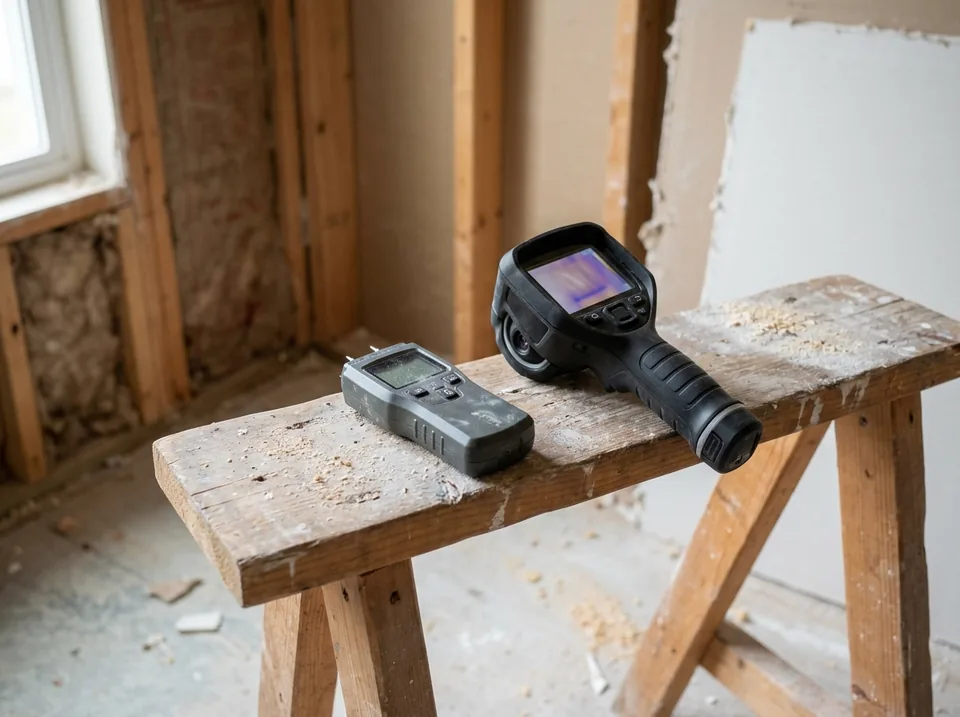
- Daily psychrometric & moisture-meter logs: Day-by-day charts showing indoor temperature, relative humidity, dehumidifier intake/exhaust readings, and wood moisture percentages dropping toward dry standard during structural drying.
- Xactimate line-item estimate: Most major insurers in Washington audit mitigation bills using Xactimate pricing databases for the Seattle–King County zip-code region. Line-item billing with clear equipment counts and day totals avoids vague lump-sum disputes.
Should You File a Claim or Pay Out of Pocket?
Before officially opening a claim, weigh your policy deductible against the likely combined cost of mitigation and reconstruction. Many Burien homeowners carry a $1,000, $2,500, or even $5,000 deductible. If a minor laundry-room spill affects 80 square feet of tile and baseboard and mitigation runs $1,200, paying out of pocket avoids a claim surcharge on future renewals. On the other hand, a multi-room hardwood flood, ceiling collapse, or basement dry-out easily climbs into the $4,000 to $15,000+ range once drywall, paint, and flooring rebuild are factored in—making an insurance claim essential.
Use our Burien Water Damage Cost Calculator for a rough ballpark range before deciding, and remember that calling an insurance company's 1-800 claims hotline—even "just to ask"—can sometimes be logged as a zero-dollar inquiry on your CLUE report. Talking with your independent local agent or getting an on-site moisture inspection first often gives you clarity without premature paperwork.
Understanding Mitigation vs. Reconstruction Billing
Homeowners are frequently surprised to receive two separate estimates after a water loss. Phase 1 (Mitigation) stops the damage: water extraction, wet material tear-out, antimicrobial cleaning, and 3 to 5 days of commercial drying. Phase 2 (Reconstruction) puts the house back together: hanging new drywall, taping and texturing, priming and painting, reinstalling baseboards, and laying new carpet or oak flooring.
In Washington, insurance carriers often issue an initial payment based on Actual Cash Value (ACV—replacement cost minus depreciation), then release the withheld Recoverable Depreciation once reconstruction is completed and invoiced. Keep a dedicated folder (digital or paper) with every invoice, moisture log, and adjuster email so nothing is missed when requesting depreciation release.
Working Smoothly With Your Field Adjuster in King County
Once your claim is assigned, an adjuster may inspect the property in person or request a virtual photo-and-video walkthrough. Preparing a tidy one-page claim packet ahead of that conversation prevents misunderstandings and speeds up approval for both emergency mitigation and rebuild:
- Timeline of discovery & shutoff: Write down the exact hour you noticed water, when you closed the main shutoff valve, and when extraction started.
- Failed component evidence: Keep the ruptured braided supply line, cracked plastic toilet fill valve, or corroded copper elbow on the kitchen counter for the adjuster to photograph.
- Room-by-room damaged contents list: Separate structural building damage (drywall, carpet, cabinets—covered under Coverage A Dwelling) from personal belongings (area rugs, electronics, boxed holiday decor—covered under Coverage C Personal Property), listing approximate age and replacement value.
- Questions about Code Upgrade (Ordinance or Law) coverage: Older Burien homes built in the 1940s and 1950s sometimes require electrical or plumbing code upgrades when water-damaged walls are opened. Ask your adjuster whether your policy includes Ordinance or Law coverage to help offset permit-driven updates.
If your claim involves multiple affected levels—such as an upstairs laundry leak soaking a main-floor kitchen and daylight basement in Olde Burien or Three Tree Point—ask your independent mitigation crew to send their Xactimate scope and daily moisture logs directly to the adjuster while copying you on every email. Staying copied keeps you in control of scheduling and avoids surprise billing gaps.
Your Right to Choose Your Own Restoration Contractor in Washington
When you report a loss, your insurer may mention a "preferred vendor" or managed-repair network. While you are welcome to use a carrier-referred company if you like them, Washington homeowners generally have the right to choose any qualified, licensed independent restoration contractor they trust. Whichever company you hire, confirm their active Washington L&I contractor registration, liability insurance, and clear written authorization terms before equipment is set up.
Frequently Asked Questions
No—in Washington State you generally have the right to select your own licensed restoration contractor. Carrier-preferred vendors are optional, though you should always confirm your chosen contractor documents work clearly using standard line-item estimates.
Typically no. Standard policies cover the resulting water extraction, drying, and structural repairs caused by the burst pipe, while the homeowner pays for the plumbing repair itself.
Standard policies usually exclude sump pump overflow unless you carry a Water Backup & Sump Overflow endorsement. Check your declarations page for that specific rider and its dollar sub-limit.